Understanding the Divorce Process in Virginia
Key Takeaways
- Virginia requires a mandatory separation period before filing for a no-fault divorce.
- Residency requirements must be met to file for divorce in the state.
- Understanding the differences between no-fault and fault-based divorces is crucial.
- Proper filing and serving of divorce papers are essential steps in the process.
- Negotiation and mediation can facilitate amicable settlements.
- Finalizing the divorce involves a court hearing and issuance of a divorce decree.
Table of Contents
- Introduction
- Residency Requirements
- Grounds for Divorce
- Separation Period
- Filing Divorce Papers
- Serving Divorce Papers
- Negotiation and Mediation
- Finalizing the Divorce
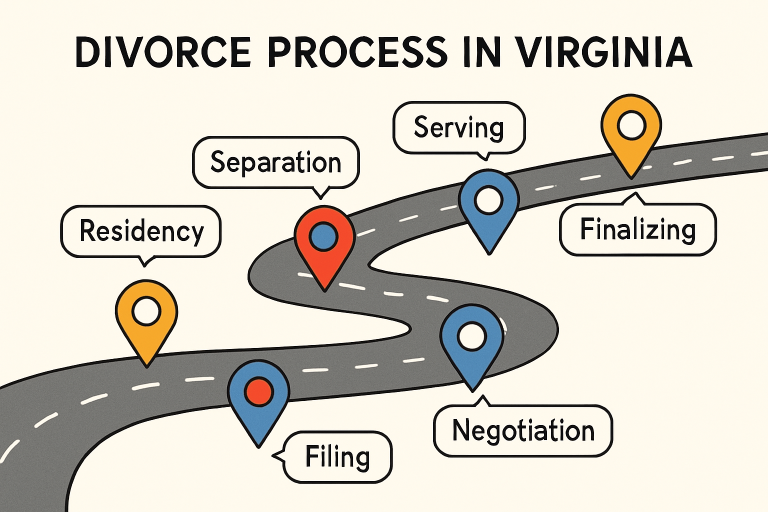
Divorce not only marks a significant life transition but can also be a daunting legal and emotional process. Navigating the various requirements and procedures unique to Virginia is essential for anyone considering ending their marriage. Whether you’re contemplating a separation or are already sure of your path, understanding what lies ahead can make a challenging experience more manageable. If you’re thinking about starting this process, consulting a knowledgeable Fairfax divorce attorney can give you clarity and ensure your rights are protected at every step. A clear divorce roadmap in Virginia ensures fairness and resolution, focusing on Virginia-specific rules, working with legal professionals, maintaining open communication, and utilizing available resources.
Residency Requirements
To file for divorce in Virginia, at least one spouse must have lived in the state for a minimum of six months before filing. This residency rule ensures that the Virginia courts have authority over your case and can issue legally binding divorce decrees. If neither party meets this requirement, you will need to wait until it is fulfilled. For military families, special residency provisions may apply. A service member stationed in Virginia for six months is generally considered a resident for divorce purposes. Verifying your status ahead of time helps you avoid unnecessary delays when initiating proceedings.
Grounds for Divorce
Virginia recognizes both no-fault and fault-based divorces. Understanding the distinction is important for determining the path and timeline of your case:
- No-Fault Divorce: This requires spouses to live separately for a specified period, either with a signed agreement or an extended period if children are involved.
- Fault-Based Divorce: This is granted on grounds such as adultery, cruelty, desertion, or conviction of a felony. Fault divorces may impact issues such as property division or spousal support.
Choosing the right grounds for your situation should be done carefully, preferably after consultation with an attorney familiar with family law in Virginia.
Separation Period
The requirement for separation is central to no-fault divorces in Virginia:
- If you have no minor children and have a written separation agreement, you must live apart for at least six months.
- If minor children are involved, at least one year of separation is mandatory, regardless of whether an agreement exists.
“Living separately” means no cohabitation as if you were a married couple. This includes sleeping separately and separating finances and domestic responsibilities. Cohabitation or reconciliation during this period may reset the required separation period.
Filing Divorce Papers
The official start of the divorce process is when one spouse (the plaintiff) files a “Complaint for Divorce” at the circuit court in the city or county where either spouse lives. This legal document includes details about the grounds for divorce, residency, and any requests regarding property, support, or custody. Upon filing, you will receive a case number and further instructions on how to serve papers to your spouse, which is the next step in the process. Mistakes in completing your Complaint can result in delays, so careful attention to detail is necessary.
Serving Divorce Papers
The law requires that the non-filing spouse (defendant) be formally notified. This can be accomplished by:
- Personal service by a sheriff or a process server
- Having the defendant voluntarily sign an Acceptance or Waiver of Service
If you are unable to locate your spouse, publication in a local newspaper may be required to fulfill this step. Proper service is foundational to due process and ensures your divorce cannot be challenged on procedural grounds later.
Negotiation and Mediation
Many divorces in Virginia are resolved through negotiation or mediation, rather than courtroom litigation. These alternative dispute resolution approaches often lead to faster, less adversarial outcomes:
- Negotiation: Direct discussions or attorney-led talks help both parties reach a settlement on property, custody, and support—minimizing court involvement.
- Mediation: A neutral third party helps spouses reach an agreement, particularly on contentious issues. Mediation is commonly recommended and sometimes required by the courts.
Resolving disputes before they escalate into court battles is typically in everyone’s best interest, as it saves both time and money. Learn more about alternative dispute resolution in divorce at Nolo’s Divorce Mediation Basics.
Finalizing the Divorce
Once all terms are agreed upon or ordered by the court, a final hearing is scheduled. During this brief court appearance, the judge will review the file and confirm that all requirements have been met. If approved, the judge signs a Final Decree of Divorce, a document that formally and legally ends the marriage. This decree covers all settled issues, including property distribution, custody arrangements, and support obligations. It is advisable to keep your decree in a safe place, as it will be needed to update records, accounts, and legal documents after your divorce is finalized.
By understanding and preparing for each step of Virginia’s divorce process, individuals can take control of a difficult transition and approach it with clarity, dignity, and the confidence to make informed choices about their future.