How Workers’ Compensation Supports Recovery After Workplace Injuries
Key Takeaways
- Workers’ compensation covers crucial medical expenses and replaces partial wages, offering much-needed relief to employees.
- Mental health support and early intervention are central to holistic injury recovery.
- Structured return-to-work programs help employees reintegrate safely and reduce the risks of prolonged absence.
Workplace injuries affect many aspects of an employee’s life, from health to earning ability. Knowing the basics of workers’ compensation is crucial for injured workers, as it provides practical and financial support. This system provides financial aid for medical bills, rehabilitation, and wage replacement, easing the recovery process. Enlisting the guidance of a workers’ comp attorney can further ensure that employees receive the benefits and advocacy needed to achieve the best possible recovery outcomes.
Beyond physical recovery, workers’ compensation also addresses the holistic needs of injured employees. With mental health concerns frequently accompanying physical injuries, early intervention and support programs are essential parts of a comprehensive recovery plan. Together with employer support and structured return-to-work programs, workers’ compensation thus acts as a lifeline for both the injured worker and their family, providing multidimensional aid through every stage of recovery.
Financial Support Through Workers’ Compensation
One of the immediate challenges after a workplace injury is managing financial stress from medical care and lost wages. Workers’ compensation helps by covering medical expenses such as hospital visits, surgeries, medications, and physical therapy. Knowing costs are covered offers reassurance. It also provides wage replacement benefits, allowing injured employees to receive part of their income while recovering. This support helps families stay financially stable, promoting better health and quicker recovery.
Addressing Mental Health in Recovery
Workplace injuries don’t just leave a physical mark—they often carry deep emotional consequences, too. Injured workers are at an increased risk of developing anxiety, depression, or post-traumatic stress after an accident. Research from the CDC’s National Institute for Occupational Safety and Health (NIOSH) underscores that injured workers are much more likely to experience psychological distress than their uninjured colleagues, especially when recovery periods are prolonged or uncertain.
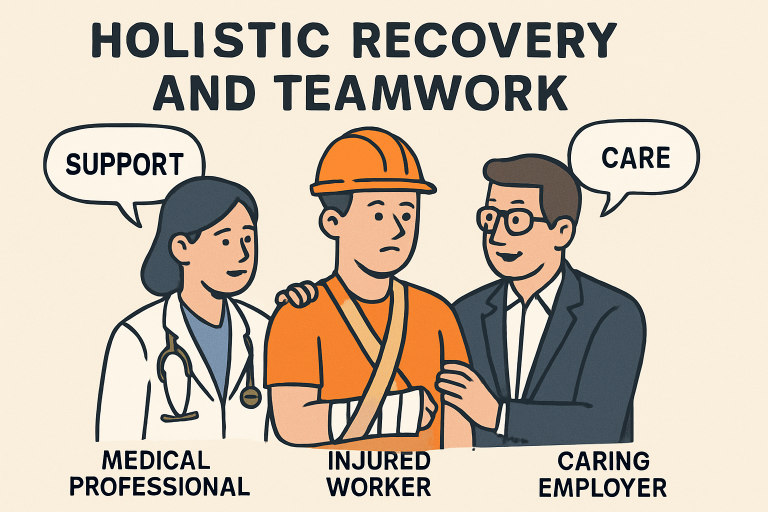
Employers and workers’ compensation programs are increasingly recognizing the importance of mental health alongside physical healing. Early access to mental health care—through counseling, support groups, or company-backed wellness programs—can accelerate emotional recovery and even boost overall rehabilitation success rates. An environment that supports psychological well-being fosters resilience and reduces the chances of chronic disability due to work-related trauma.
Implementing Effective Return-to-Work Programs
Return-to-work programs help employees reintegrate after injury by providing modified job duties or flexible schedules tailored to their capabilities. The benefits include reduced disability duration, improved morale through workplace engagement, and lower employer costs from decreased absenteeism and long-term disability.
The Employer’s Role in Supporting Recovery
Employers are the backbone of workplace injury recovery. A proactive employer helps injured employees feel valued, which aids quicker recovery. Support includes open communication, access to mental health resources, and workplace accommodations. Collaboration among employers, employees, and healthcare providers ensures the development of effective return-to-work strategies and the implementation of appropriate job modifications. Wellness and safety programs promote prevention and foster a culture prioritizing recovery and health for everyone.
Conclusion
Recovering from a workplace injury is about much more than physical healing—it demands a comprehensive and compassionate approach. Workers’ compensation provides the financial and medical foundation needed to support recovery, while also emphasizing the importance of returning to work and maintaining psychological well-being. By partnering with informed employers and seeking professional legal support when necessary, injured workers can focus on regaining their health and restoring stability to their lives. As the foundation of safe and fair workplaces, workers’ compensation aims to create a mutually beneficial environment for both employees and employers.