How to Choose a Vehicle That Fits Your Commute, Budget, and Weekend Plans
Key Takeaways
- Choose for your everyday routine before shopping for occasional needs.
- Match vehicle size, powertrain, and cargo space to how you actually drive.
- Look beyond the payment by estimating fuel, insurance, maintenance, and resale costs.
- Compare safety information for the exact model year and trim you are considering.
- Use a thorough test drive to check comfort, visibility, parking, and storage.
Table of Contents
- Start With Daily Driving Needs
- Choose the Right Vehicle Size
- Compare Gas, Hybrid, and Electric Powertrains
- Consider Local Roads and Weather
- Review Safety and Ownership Costs
- Make the Test Drive Count
- Choose New, Used, or Certified Pre-Owned
- Create a Shopping Checklist
The best vehicle is not necessarily the biggest, fastest, or most feature-packed option. It is the one that supports your normal commute, fits your budget, carries the people and gear you use most often, and remains comfortable when weekend plans change. Whether you are comparing compact cars, SUVs, hybrids, or EVs, learn more about available options before narrowing your list.
Start with practical questions. How far do you drive each week? How many passengers usually ride with you? Do you need room for child seats, a dog, work equipment, camping supplies, or sports gear? Clear answers make it easier to avoid paying for capabilities you may rarely use.
Start With Daily Driving Needs
Your regular schedule should lead the decision. A driver with a short city commute may value easy parking and efficient fuel use, while someone who covers long highway distances may prioritize seat comfort, quiet cruising, and a convenient refueling or charging plan. School runs, frequent client visits, carpooling, and regular road trips should all influence the shortlist.
Separate necessities from rare events. If you haul bulky cargo only a few times a year, a compact SUV with folding seats may be more sensible than a three-row vehicle that costs more to buy, fuel, insure, and park every day.
Choose the Right Vehicle Size
Compact Cars and Hatchbacks
Compact vehicles often make sense for solo drivers, couples, and small households. They can be easier to maneuver in crowded lots, usually need less space in a garage, and may offer strong efficiency. A hatchback can add useful flexibility for groceries, luggage, or smaller hobby equipment without moving up to a larger vehicle.
Compact and Midsize SUVs
For many shoppers, compact and midsize SUVs strike a useful balance. They can provide elevated seating, flexible cargo areas, and easier access for passengers while remaining more manageable than a full-size model. Check rear-seat legroom, the cargo opening, and whether the floor stays flat when seats fold down.
Three-Row SUVs
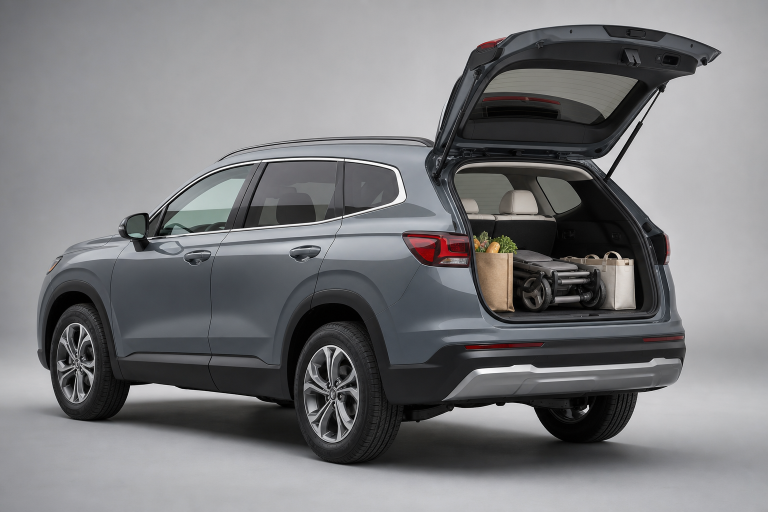
A third row is worthwhile when you regularly carry more people, not simply because it is available. Test access to the back row, adult comfort, space behind the last row, and the effort required to install or reach child seats. Some three-row SUVs are excellent people movers, while others reserve the last row for occasional use.
Compare Gas, Hybrid, and Electric Powertrains
Gas-powered vehicles remain a straightforward choice for drivers who take frequent long trips, travel through rural areas, or lack dependable charging where they live. Fueling is familiar, and service needs are widely understood.
Hybrids can be especially appealing for stop-and-go commuting because they reduce fuel use without requiring plug-in charging. Compare the additional purchase cost against expected mileage and how long you plan to keep the vehicle.
Electric vehicles offer quiet driving, home-charging convenience, and fewer routine powertrain maintenance items. Before committing, confirm that you can charge at home, at work, or near your usual routes. Also consider how often you take long trips and whether charging stops fit those travel plans.
For any powertrain, ask where you will refuel or charge, how many miles you drive each week, what maintenance it needs, and whether hot summers, heavy rain, or highway travel will shape your experience.
Consider Local Roads and Weather
Texas-area driving can involve highway traffic, construction zones, rough pavement, sudden downpours, rural routes, and intense heat. Ground clearance, outward visibility, air-conditioning performance, and tire quality may matter more to your day-to-day satisfaction than a long list of optional features.
All-wheel drive can improve traction in certain conditions, but it does not replace attentive driving, proper tire pressure, healthy tread, or safe speeds on wet pavement. If you expect gravel roads or uneven driveways, inspect underbody clearance and test how the suspension feels over imperfect surfaces.
Review Safety and Ownership Costs
Compare crash performance and driver-assistance features before deciding. Automatic emergency braking, blind-spot monitoring, lane-support systems, rear cross-traffic alerts, and effective headlights can all be meaningful. Check safety ratings and recall information for the exact model year, because ratings and standard equipment can vary between versions.
It is also useful to review crashworthiness, crash avoidance, headlights, and child-seat anchor usability alongside government data. Safety is more than vehicle size. Structure, restraints, tires, visibility, technology, and responsible driving all matter.
Next, calculate the full ownership cost, not just the monthly payment. Include purchase price or lease terms, financing interest, insurance, fuel or charging, scheduled maintenance, tires, registration, taxes, and likely resale value. Compare two or three candidates over three or five years for a more useful picture of affordability.
Make the Test Drive Count
- Adjust the seat, steering wheel, and mirrors before leaving the lot.
- Check sightlines over the hood and around the rear roof pillars.
- Try entry and exit from every row your household will use.
- Drive on city streets and faster roads if possible.
- Test braking, turning, parking, and highway merging.
- Connect your phone and assess the controls without taking focus from driving.
- Bring common cargo, such as a stroller, work bag, or sports equipment.
Choose New, Used, or Certified Pre-Owned
New vehicles provide current technology, full factory warranty coverage, and the ability to select preferred equipment, though early depreciation can be higher. Used vehicles can lower the initial price and expand your choices, but they deserve a careful review of history reports, service records, tire condition, open recalls, and an independent inspection.
Certified pre-owned vehicles may add manufacturer inspection standards, limited warranty coverage, and roadside assistance. Read the exact terms, including coverage limits and exclusions, rather than assuming every certified program is identical.
Create a Shopping Checklist
- Maximum all-in monthly budget
- Preferred body style and minimum passenger capacity
- Required cargo space and towing needs, if any
- Expected weekly mileage and preferred powertrain
- Need for all-wheel drive or added ground clearance
- Must-have safety and comfort features
- New, used, or certified pre-owned preference
A thoughtful checklist keeps the decision focused. Compare at least three similar vehicles, verify real-world fit during the test drive, and choose the one that supports your routine, budget, safety priorities, and future plans with the fewest compromises.