Sealing the Sanctuary: Evaluating Your Home’s Resistance to Rodent Infestation and Ensuring Lasting Protection
Maintaining a rodent-free home isn’t just a matter of comfort or aesthetics, as it’s a critical aspect of protecting your family’s health and the integrity of your property. Rodents, such as mice and rats, are notorious for their ability to spread potentially life-threatening diseases, contaminate food supplies, and create significant fire hazards by gnawing on electrical wires. Beyond the visible damage, the unseen threats posed by their droppings and urine in hidden spaces can undermine wellness over time. Evaluating the security of your home against rodent invasions and taking proactive measures to prevent them can help steer you away from these serious risks before they escalate. For homeowners seeking efficient rodent control solutions, understanding comprehensive prevention and defense strategies is the foundation of sustainable rodent management and overall peace of mind.
Rodent infestations can affect any household, regardless of age or location. To protect your living space, adopt a proactive mindset by scheduling regular inspections, maintaining consistency, sealing entry points, and utilizing reputable resources. Integrated pest management, a holistic approach that combines DIY tactics with professional expertise, is the bedrock of long-term rodent control. Regular vigilance and timely professional intervention strengthen your home’s defenses for years to come.
Understanding the Risks
Rodents are not just pests but also significant threats to health and property safety. They carry pathogens like hantavirus, leptospirosis, salmonella, and rat-bite fever, contaminating food supplies, kitchen surfaces, and living areas. Their gnawing habits cause damage to insulation, drywall, floor joists, and electrical wiring. They are responsible for up to 25% of undiagnosed house fires, primarily due to unnoticed wire damage. Unchecked rodent activity can lead to expensive repairs, reduced home value, and insurance complications. Therefore, swift identification and mitigation of these hazards are crucial for safeguarding household investment and safety.
Common Entry Points
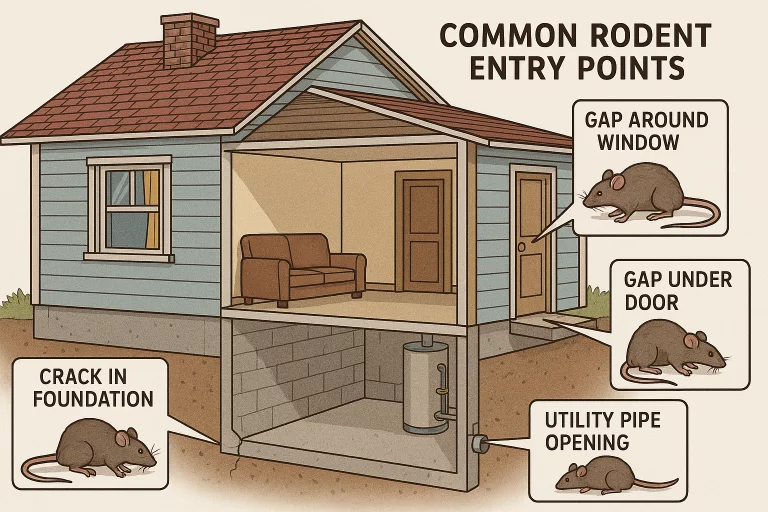
Rodents are both agile and persistent, capable of exploiting even the smallest vulnerabilities in your home’s exterior and interior. These masterful invaders can slip through cracks and seams as narrow as a dime, making seemingly insignificant gaps a gateway to a full infestation. The most common entry points include
- Gaps around doors and windows: Damaged or missing weather stripping, as well as even minuscule cracks around door and window frames, can create easy access points for rodents.
- Holes in walls or floors: Utility and plumbing penetrations, areas created for wires, vents, or pipes, are often overlooked but are prime locations for rodent entry if not tightly sealed.
- Openings around pipes and vents: Spaces where gas, water, or HVAC lines enter the structure can often have gaps that settle over time, giving rodents an unobstructed path into your home’s core.
- Cracks in the foundation: As homes settle, foundational cracks may open up at ground level or in basements, creating discreet entryways for rodents to exploit, especially during colder months.
Detecting and addressing these vulnerabilities should become part of your seasonal maintenance routine. At a minimum, conduct thorough inspections twice a year, ideally in the fall and spring, and make repairs promptly to prevent opportunities for rodent intrusion before cold weather drives them indoors.
Effective Prevention Strategies
The most reliable method to keep rodents out is to make your home as unattractive and inaccessible to them as possible. Prevention begins with a firm understanding of rodent habits and a commitment to maintaining a barrier between your living space and the outside world. These core strategies are particularly effective:
- Seal Entry Points: Inspect your home’s perimeter and foundation carefully, sealing any openings larger than a quarter inch with durable materials such as steel wool, caulk, or wire mesh. Even the smallest unsealed gap, if overlooked, may be all a mouse or rat needs to gain access.
- Eliminate Food Sources: Invest in airtight storage for pantry goods and pet foods, clean kitchen and dining areas regularly, sweep and mop up dropped crumbs, and commit to prompt spill cleanup. Even nighttime food remnants can attract opportunistic rodents.
- Maintain Cleanliness: Declutter basements, attics, and garages to remove potential nesting materials for birds. Dispose of unnecessary cardboard, stacks of newspapers, and other clutter. Outdoors, trim vegetation back from your foundation and keep firewood or brush piles at least 20 feet from your structure.
Signs of Infestation
Early detection is crucial for limiting the damage and risk associated with a rodent infestation. Being able to identify the warning signs quickly can mean the difference between a manageable situation and widespread, persistent trouble. Watch for these indicators:
- Droppings: Small, dark, rice-shaped pellets that accumulate in hidden corners, pantries, drawers, or cupboards, anywhere rodents may scavenge for food.
- Gnaw marks: Evident on wires, wood, storage containers, and sometimes on water pipes or insulation in attics and crawlspaces.
- Nesting materials: Look for shredded paper, fabric, or insulation bunched up in secluded areas, such as behind or under appliances, inside storage boxes, or within attics or crawl spaces.
- Scratching noises: Listen particularly after dusk for erratic scuttling or scratching sounds coming from within walls, ceilings, or attic floors. Rodents are typically most active at night.
- Distinct odors: Persistent, foul, musky smells in isolated spots, which may indicate the presence of active nests, urine, or decaying droppings of rodents.
When any of these signs present themselves, respond quickly by assessing the scale of the problem and deploying appropriate removal and exclusion tactics to prevent further escalation.