Common Causes of Garage Door Problems and How to Fix Them
Table of Contents
- Malfunctioning Garage Door Opener
- Noisy Garage Door
- Broken Garage Door Springs
- Garage Door Off Its Tracks
- Garage Door Won’t Fully Close or Open
- Remote Control or Keypad Not Working
- Garage Door Reverses Before Closing
- Garage Door Falls Too Quickly
- Garage Door Sticks While Opening or Closing
- When to Call a Professional
A well-functioning garage door is crucial for safeguarding your home and providing convenient access to your garage. However, like any mechanical system, garage doors can develop issues over time due to continual use and exposure to the elements. Learning about frequent problems and their remedies helps you maintain your garage door and minimize unexpected disruptions. Whether you’re facing minor glitches or more significant breakdowns, understanding the basics is key to effective maintenance and repair. For urgent issues or persistent malfunctions, seeking professional garage door repair services ensures your door remains secure and functional.
Basic troubleshooting can resolve many problems, but some require professional intervention. This guide details common garage door issues and practical solutions, from malfunctioning openers to noisy doors and broken springs. Keeping your system in good condition helps prevent costly repairs in the future and boosts the lifespan of your garage door.
Suppose you plan to upgrade or need detailed instructions to install a garage door. In that case, professional installation ensures everything fits and operates as designed—reducing the risk of future problems and maximizing safety.
Malfunctioning Garage Door Opener
If your garage door refuses to open or close when activated, the opener is the likely culprit. Start by checking the power source and confirming the outlet or circuit breaker is functioning correctly. A simple fix might restore function, like replacing dead batteries in the remote. If the opener motor makes noise but the door remains stationary, inspect for a disengaged trolley or stripped gears. Consult a local expert for opener repair or replacement for electronics or motor issues beyond basic troubleshooting. Guidance from resources like Family Handyman can also be valuable for DIYers.
Noisy Garage Door
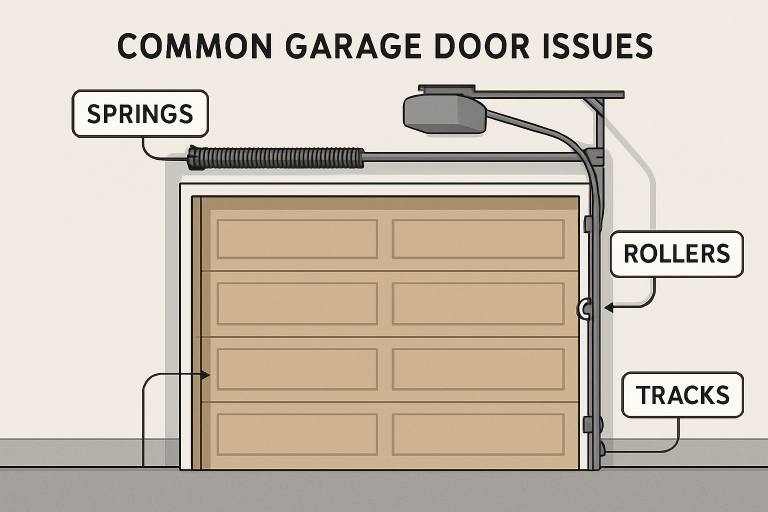
Squeaking, grinding, or rattling from your garage door signals maintenance is needed. The most frequent causes are loose bolts, worn-out rollers, and a lack of lubrication. Regularly tightening all hardware and applying garage door lubricant to rollers, hinges, and tracks can quiet most doors. If noises remain, check for worn rollers or damaged hinges and replace them as needed. Loud bangs may indicate a broken spring or cable, which calls for immediate attention from a qualified technician.
Broken Garage Door Springs
Garage door springs carry most of your door’s weight, making the door easy to lift by hand or with the opener. Over years of use, these springs inevitably weaken and may snap, causing the door to stay shut or lift unevenly. Broken springs are dangerous and should not be repaired by non-professionals, as they are under high tension. If you hear a loud bang from the garage or notice the door is heavy or crooked, stop using the door and schedule service with a certified garage door spring specialist.
Garage Door Off Its Tracks
A garage door that is misaligned or has jumped its tracks won’t operate properly and can become a safety risk. This typically happens due to an impact, worn rollers, or obstructed tracks. Check the tracks for blockages or bending and ensure the rollers haven’t dislodged. Gently realign tracks with a rubber mallet if only slightly bent. Professional realignment or replacement is safest if the door is stuck or the tracks are severely damaged.
Garage Door Won’t Fully Close or Open
Inspect the sensor system if your garage door fails to open or close completely. Clean the sensor lenses and confirm that both sensors are facing each other and aligned correctly. Remove debris from the tracks and look for dents or bends. If the door reverses before touching the ground, adjust the limit and force settings on the opener according to your manual. Contacting a technician for stubborn problems or repeated failures ensures a thorough diagnosis and solution.
Remote Control or Keypad Not Working
When remotes or wireless keypads become unresponsive, the first step is to replace their batteries. Signal interference from nearby electronic devices can also disrupt operation; relocate such devices and try again. If reprogramming is needed, consult your owner’s manual to reset and resync the remote or keypad. Persistent problems may require a new remote or keypad compatible with your opener system.
Garage Door Reverses Before Closing
Doors that begin to close and then reverse usually have a safety sensor or sensitivity issues. Inspect both sensors for dirt or misalignment. Remove anything in the sensors’ path, including objects or dust. If the system detects even minor obstacles, it will reverse to prevent accidents. Adjust the sensitivity settings on the opener as the manufacturer directs, or seek help if the issue persists. More safety guidelines and troubleshooting advice can be found at Angi.
Garage Door Falls Too Quickly
A garage door that suddenly drops or falls too quickly is a significant hazard. The most common causes are a broken torsion spring or snapped cable. Both components help safely support the door’s weight while moving. If you spot frayed or broken cables or suspect a spring has failed, do not attempt to operate or repair the door. Immediately call a service professional to prevent injury and further damage.
Garage Door Sticks While Opening or Closing
Doors that catch, stick, or jerk midway during movement usually have dirty or rusty tracks, loose hinges, or poor balance. Clean the tracks of built-up dirt and rust, and lubricate all moving parts. Test door balance by disconnecting the opener and manually lifting: a well-balanced door will stay open about halfway. Tighten or replace any loose or worn hinges or rollers you find.
When to Call a Professional
While routine garage door maintenance and minor troubleshooting are safe for DIYers, specific repairs demand enclosed expertise; replacing springs, handling snapped cables, or realigning a heavy door is hazardous work best left to trained professionals. If your garage door shows serious problems—especially those involving the opener motor, large springs, or structural issues—protect your family and home by scheduling service from a qualified technician. Professional installation and repair services also ensure warranty compliance and peak performance for your garage door.
Understanding the root causes of garage door issues empowers homeowners to address minor problems before they escalate into costly repairs. Regular maintenance—such as lubricating moving parts, tightening hardware, and checking alignment—can significantly extend the system’s lifespan and ensure reliable operation. When mechanical or electrical complications arise, timely professional inspection helps prevent further damage. With proper care, your garage door will remain safe, efficient, and dependable for years.