What Are the Most Secure Identity Verification Methods in 2026?
Identity fraud has gone farther than just stealing passwords. Deepfakes, synthetic identities, and account takeover attacks have made digital fraud significantly more sophisticated and significantly harder to detect.
A hacking group called USDoD claimed to have stolen 2.9 billion records that include names, addresses, and Social Security numbers of millions of Americans and put that data for sale on the dark web for $3.5 million. Such a high level of exposure revealed that traditional verification methods like passwords, manual ID checks, and knowledge-based questions are no longer sufficient.
Businesses across every sector are now investing in secure identity verification methods that use AI, biometrics, and real-time fraud detection to stay ahead of threats that legacy systems were never designed to handle. In this article, we will discuss what identity verification is and its effective methods.
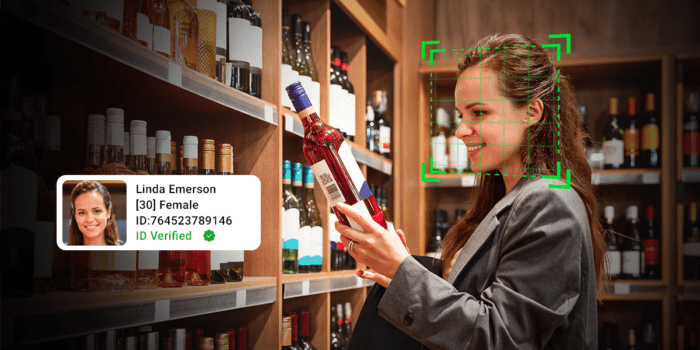
What Is Identity Verification?
Identity verification confirms that a person is genuinely the one who they claim to be by validating their identity documents, biometrics, and behavioral patterns against verifiable data sources.
Online identity verification plays a critical role in digital onboarding, age-gated purchases, financial transactions, and compliance with Know Your Customer (KYC) and anti-money laundering (AML) regulations, without which the businesses have no reliable way to prevent unauthorized access, fraudulent account creation, or underage sales.
What Makes an Identity Verification Method Secure?
Various identity verification software solutions deliver a different level of protection. Focus on the following four characteristics to define genuinely secure systems.
1. Advanced Fraud Detection Capabilities
Secure fraud prevention technology must detect forged documents, tampered IDs, photo substitutions, and deepfake attempts automatically without relying on human review that is comparatively inconsistent and slow.
2. Strong Authentication Factors
Reliable secure identity verification methods combine multiple authentication layers consisting of document validation, biometric matching, and liveness detection, which ensures that compromising one factor alone is not sufficient to gain access.
3. Real-Time Verification
AI-powered identity verification systems process in seconds. Real-time verification is essential for retail, ecommerce, and financial services environments where service delays affect conversion and customer experiences directly.
4. Privacy and Data Protection
Secure digital identity verification solutions apply encryption at every stage of data handling like capturing, transmitting, and storing data, along with complying with all the applicable regulations without retaining unnecessary personal information.
The Most Secure Identity Verification Methods in 2026
With evolving tech, there is a great scope of using various methods for verification.
Let’s evaluate the most secure methods of verification in 2026.
1. AI-Powered Document Verification
AI-powered identity verification platforms scan government-issued IDs and driver’s licenses using optical character recognition (OCR) and machine learning algorithms that extract and validate data in seconds. AI-based verification automatically detects fake documents, altered information, expired IDs, and tampered security features, flagging discrepancies.
Benefits for businesses:
- Faster verification at every customer touchpoint
- Reduced reliance on manual document reviews
- Fraud prevention technology incorporated into the transaction workflow directly
2. Biometric Identity Verification
Biometric identity verification confirms a person’s identity using unique physical characteristics that cannot be shared, guessed, or stolen like passwords. It includes facial recognition, fingerprint scanning, iris recognition, and voice recognition.
Why biometrics are more secure:
- Biometric data is specific to the individual and is difficult to duplicate compared to password or knowledge-based credentials
- Provides stronger, verifiable proof of identity at the point of authentication
- Accurate user authentication without requiring the customer to remember or present a credential
3. Facial Recognition with Liveness Detection
Facial recognition is not enough since a photograph or video replay can defeat a basic facial match. Facial recognition paired with 3D liveness detection and anti-spoofing technology confirms that the person being verified is physically present.
How liveness detection prevents fraud:
There are three major fraud techniques when it comes to facial recognition:
- Photo spoofing: Printed or displayed images of a real person
- Video replay attacks: Pre-recorded footage submitted as a live feed
- Deepfake attempts: AI-generated synthetic face representations
Solution: The role of AI here is crucial since the algorithm of advanced verification platforms distinguishes real users from fake representations in real time, making it a secure identity verification method.
4. Digital Identity Verification
Digital identity verification solutions enable users to carry verified credentials in digital identity wallets instead of re-submitting documents for every transaction.
The role of digital identity systems:
- Digital identity wallets save pre-verified credentials the user controls
- Verified credentials reduce re-verification tasks across multiple platforms
- Identity solutions minimize the data exposure and breach risk
Benefits of digital identity systems:
- User-controlled identity sharing where customers decide what information they disclose
- Reduced data exposure for the business storing verification records
- Faster authentication processes for returning verified users
5. Behavioral Biometrics
Behavioral biometrics analyze how a user interacts with a device to detect discrepancies that indicate unauthorized access without interrupting the verified user’s experience.
Examples of behavioral signals analyzed:
- Typing patterns: Rhythm, speed, and error rate
- Mouse movements: Path, pressure, and click behavior
- Device usage habits: Orientation, grip pattern, and session behavior
As these signals are captured passively, fraud prevention technology identifies suspicious activity without any added step, making it a powerful continuous authentication layer alongside secure identity verification methods.
6. Two-Factor and Multi-Factor Authentication (MFA)
MFA remains one of the most reliable secure identity verification methods because it requires multiple independent verification factors before access is granted.
Combining factors such as…
- Passwords: the baseline knowledge factor
- Biometrics: a unique physical or behavioral characteristic
- One-time passwords: time-sensitive codes sent to a verified device
- Security tokens: hardware or software-generated authentication keys
Conclusion
Digital frauds and their techniques are evolving faster, and credential-based verification is not sufficient. Secure identity verification methods like AI-powered document validation, biometric identity verification, liveness detection, and multi-factor authentication give businesses the fraud prevention technology to prevent data and business loss, protect customers, and stay compliant with the rules.
The service providers using the latest technology bring these capabilities into a single identity verification software platform built for both in-store and online verification across retail, ecommerce, tobacco, liquor, and age-restricted categories. Businesses adopting AI-powered identity verification are not only reducing risk but also building customer trust that makes commerce sustainable.