ISO 14001 Certification in Kuwait: What Construction Companies Really Need to Know
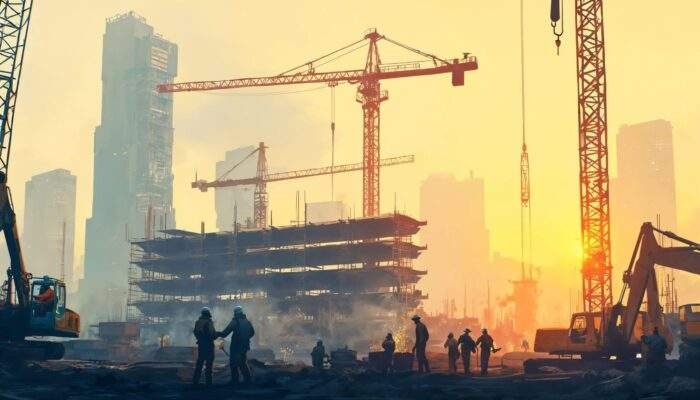
Kuwait doesn’t really do “slow” when it comes to construction. New housing developments, office towers, roads, factories, and public infrastructure all seem to be under way at the same time, and for the firms behind them, the usual pressures apply: hit the deadline, stay on budget, don’t compromise on quality. But there’s a fourth thing on that list that’s getting harder for companies to push aside — what their work is doing to the environment around it.
Spend an hour on any active site and it’s obvious why. Trucks come and go all day. Machinery runs nonstop. Excavation throws dust into the air. Waste builds up as each phase wraps. And behind all of it, crews are burning through fuel, water, electricity, paint, and chemicals just to keep the project moving forward.
None of that is unusual — it’s just the nature of the industry. What actually separates one site from another is whether all of it is being controlled properly.
Take a fuel leak. In the moment, it might look like nothing more than an annoyance. Ignore it, though, and it can turn into something much bigger. Waste that’s mishandled or dust that spreads past the site boundary can cause the same kind of trouble. Having procedures already worked out means workers know how to respond before a small problem grows into a real one.
That’s more or less what ISO 14001 Certification in Kuwait does for construction firms — it hands them a framework for putting together an environmental management system. Instead of scrambling to fix problems after they happen, the company can plan its controls ahead of time, put people in charge of specific responsibilities, keep an eye on what’s happening across the site, and adjust as needed.
For a contractor coming across it for the first time, ISO 14001 can look like a dense, overly formal standard. But once its requirements are tied to the actual work happening on a job site, it stops feeling abstract and starts making practical sense.
What ISO 14001 Really Asks of a Construction Business
The core of ISO 14001 is a set of requirements for building an environmental management system, or EMS. For a construction company, that system has to be grounded in what the business actually does — not just written up to satisfy an auditor and then forgotten.
Picture a normal project in motion. Trucks deliver materials. Machines run. Crews handle their tasks. Waste accumulates. Subcontractors show up to take care of specialized jobs. Every piece of that has some kind of environmental consequence attached to it.
Depending on the project, that might mean staying on top of construction waste, dust, emissions, fuel, chemicals, water and energy consumption, and having an emergency plan ready to go.
Fuel storage is one of the simplest examples. Anywhere fuel is kept on-site, the people working nearby need to know exactly how to handle it — and what to do the second something goes wrong, like a leak. None of this has to be complicated. It just has to be clear enough that people can actually remember it and act on it.
Waste follows a similar pattern. Materials often need to stay separated, and the company needs to know precisely how that waste is collected and where it ends up once it’s off-site.
When a certification body comes in to audit an ISO 14001 system, they’re not just flipping through paperwork looking for signatures. They want proof that what’s written down is actually happening on the ground.
Why This Matters So Much on Sites in Kuwait
No two construction projects share exactly the same environmental risks. Sites focused on excavation tend to produce a lot of dust and soil waste. A commercial building nearing handover is more likely dealing with packaging, leftover paint, chemical containers, and general debris. Industrial projects bring their own set of issues depending on the processes and materials involved.
Kuwait’s climate makes this even trickier. Hot, dry air, strong winds, exposed soil, ongoing excavation, and heavy vehicle traffic all combine to make dust one of the harder things to keep under control.
And the impact doesn’t necessarily stop at the site fence. Many projects sit right next to roads, homes, businesses, or other active job sites. Dust drifting off-site, a leak nobody noticed, materials stored the wrong way, or waste that’s piling up unchecked can all become someone else’s problem fast.
There’s a business dimension too. Developers, government agencies, and international clients are asking more specific questions about environmental performance these days, and in plenty of tenders and contracts, certification isn’t optional — it’s a condition of entry.
A properly built EMS ties all of this together in one place. That usually covers things like:
- Managing construction waste
- Controlling dust and emissions
- Handling fuel and chemicals safely
- Defining employee environmental duties
- Keeping tabs on subcontractors
- Running environmental inspections
- Keeping accurate records
- Getting ready for audits
So Where Does a Company Actually Start?
Getting ready for ISO 14001 doesn’t mean throwing out everything the company already does. It usually makes more sense to figure out exactly where things stand right now.
That’s what a gap assessment is for — comparing current environmental practices against what the standard actually requires. More often than not, it turns up a mix: some things the company is already handling well, and some areas that clearly need more attention.
Waste management is a good example of this. A contractor might already have a written procedure that reads perfectly well on paper. But visit two different sites and you might find two very different realities — one crew keeping detailed, consistent records, the other mostly working off verbal instructions passed down each morning.
Spotting gaps like that before the certification audit gives the company a real chance to fix them, instead of finding out the hard way during the assessment itself.
A solid review usually goes beyond waste, too — looking at fuel and chemical storage, emergency readiness, training records, water consumption, past inspection results, and any environmental incidents that have already occurred. Once that’s done, leadership has a much clearer sense of what’s working and what needs improvement.
Building a System People Will Actually Follow
Once the review wraps up, the real work starts — building or improving the EMS itself. And in construction, practicality has to come first.
Site teams are already juggling a lot: equipment, deliveries, staffing, subcontractors, and conditions that can change from one day to the next. If the environmental procedures added on top of that are too complicated, people simply won’t stick with them.
The system needs to slot naturally into how the company already runs its projects. Depending on the type of work, that might mean addressing environmental aspects and impacts, waste, dust and emissions, fuel and chemical storage, spill response, water and energy consumption, inspection routines, legal obligations, subcontractor activity, and training.
It’s also worth actually asking the people doing the work for their input. A procedure that sounds perfectly sensible when it’s written in an office can fall apart the moment it meets a real site. Supervisors, machine operators, and laborers see the day-to-day reality up close, and they’ll often spot issues that never would have come up during a planning meeting.
Employees Are the Ones Who Actually Make It Function
No environmental management system survives on the efforts of one person. A manager might oversee the whole thing, but it’s the employees and subcontractors actually doing the work who determine whether it succeeds or fails in practice.
Waste segregation is a good illustration. Setting out separate bins is only the first step — people also need to know exactly what belongs in each one, and who to ask if they’re not sure.
Emergency response works the same way. A spill-response plan gathering dust in a filing cabinet won’t help anyone if the people on-site have never actually walked through it. Workers need to understand their role and know exactly who to call the moment something goes wrong.
Short, targeted toolbox talks tend to work far better than long, formal training sessions. A crew doing excavation might spend just ten minutes covering dust control, while a team handling chemicals runs through storage and spill procedures, and the waste crew focuses specifically on sorting materials correctly. Regular inspections and the occasional refresher help keep these habits from slipping over time.
During audits, assessors often pay closer attention to how these things actually play out day to day than to what’s written in a manual.
Don’t Overlook the Subcontractors
Most large construction projects involve a rotating cast of subcontractors — electrical, excavation, transport, painting, mechanical, waste removal — and that naturally complicates environmental management.
Even a main contractor with excellent procedures can be let down by a subcontractor cutting corners.
The better approach is to set environmental expectations clearly before subcontractors even step on-site — built into contracts and reinforced during inductions and project meetings. From there, supervisors can check on things during routine inspections: is waste being handled the right way, are chemicals stored safely, is dust actually being controlled?
Catching issues while the work is still ongoing beats discovering them for the first time during a certification audit.
The Real Challenge: Doing This Across Multiple Sites
Running an EMS well on a single site takes real coordination. Doing it consistently across several projects at once is a different challenge entirely.
Every site has its own manager, its own subcontractors, its own schedule, layout, and working conditions — so a procedure that works well in one place might need adjusting somewhere else.
Dust control shows this clearly. A site heavy on excavation, with exposed soil and constant vehicle traffic, needs frequent dust management. A commercial building close to finishing is dealing with a completely different set of concerns — packaging, paint, and chemical waste.
Staff turnover adds even more complexity. Crews change often over the course of a project, so new hires need to be properly walked through environmental requirements rather than picking things up informally as they go.
Common issues that come up include:
- Keeping waste handling consistent across different projects
- Keeping environmental records current
- Watching over subcontractor practices
- Training new staff as they join
- Reporting incidents promptly
- Responding effectively when something goes wrong
- Applying controls without slowing down the actual construction work
Clear roles, simple reporting lines, and regular checks all make this a lot more manageable.
What Actually Happens During the Audit
Once the EMS is up and running, the company can book an audit with a certification body. The auditor will go through documentation and records, but that’s only one part of it — they also want to see how the system operates in real conditions.
For a construction firm, that typically involves waste records, training logs, inspection history, environmental targets, emergency plans, and operational controls. Depending on how the audit is scoped, the auditor may also visit an active site in person.
This is where implementation really counts. Having a solid procedure on paper is one thing; showing that employees are actually following it is something else entirely.
If nonconformities turn up, the company will need to look into what caused them and take corrective steps, with evidence reviewed afterward. Once everything’s in order, certification is granted.
Even then, the process doesn’t stop there. Surveillance audits happen periodically afterward to confirm the system keeps operating the way it should.
How Long Does This Whole Process Take?
There’s no single answer that applies across the board. It depends on the size of the company, the scope of its work, how many active projects and subcontractors it’s managing, and how developed its environmental practices already are.
A smaller contractor with a narrower scope of work usually has less to organize. A larger company running multiple sites at once naturally has more processes and people to bring into alignment.
Existing habits matter a lot here. If inspections, training, waste management, and recordkeeping are already happening in some form, the work is mostly about tightening and organizing them. If environmental controls have mostly been informal so far, expect the process to take longer.
Rushing just to hit a deadline rarely pays off in the end. It’s far more useful to build something realistic that people will actually stick to, rather than putting together a pile of documents right before the auditor shows up.
Pulling It All Together
Environmental management isn’t some extra task bolted onto construction work — it’s simply part of the job, right alongside budgets, schedules, labor, equipment, clients, and subcontractors.
For construction companies in Kuwait, ISO 14001 Certification offers a structured way to handle all of this: clear procedures, defined accountability, ongoing monitoring, and a built-in path for improvement.
At the end of the day, how well any of this works comes down to how deeply it’s built into daily operations. Management needs to back it, employees need to understand their part, supervisors need to stay on top of it, and subcontractors need to follow the standards set for the project.
When all of that comes together, environmental management stops being something done just to earn a certificate — it becomes part of how the company actually builds.