What Are the Benefits of Automated Storage Systems for Warehouse Operations?
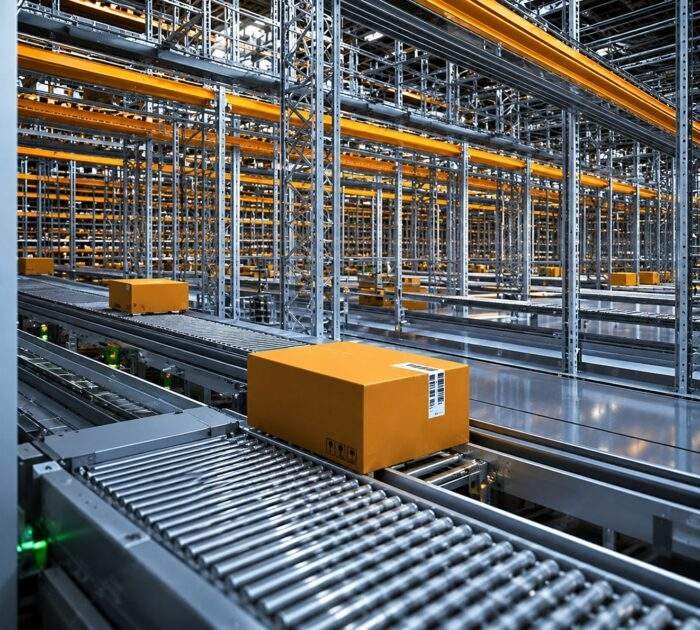
A warehouse that’s outgrown its layout doesn’t usually announce itself all at once. It shows up in smaller ways first: pickers taking longer routes to reach popular SKUs, pallets stacked in an aisle because there’s nowhere else to put them, a receiving team working late because put-away can’t keep pace with the trucks. None of these problems look urgent on their own. Together, they’re a sign the storage process wasn’t built for the volume now moving through it.
Automated storage is one response to that kind of pressure. It won’t fix a warehouse with a fundamentally broken layout, and it isn’t cheap enough to be worth considering for every operation. But for a facility fighting for floor space or losing hours to repetitive retrieval trips, it’s worth understanding what it actually changes.
What Is an Automated Storage System?
At a basic level, an automated storage system uses equipment, and usually software, to store and retrieve inventory without a person walking to the location every time. The category most people mean when they say this is AS/RS, short for Automated Storage and Retrieval Systems: vertical lift modules, horizontal carousels, and crane-based units that run along fixed rails between racks.
What makes any of it work is the pairing of a storage retrieval system with accurate location data. The equipment only helps if the software behind it knows exactly where each item sits. Get that wrong, and automation just moves the same disorganization around faster.
Where Automated Storage Systems Can Make a Difference
Rather than list generic benefits, it helps to look at where the friction actually shows up, and how automation addresses that specific point.
1. Making Better Use of Available Space
Floor space and vertical space aren’t the same resource, and a lot of warehouses only use one of them well. A building with thirty-foot ceilings and racking topping out at twelve feet is leaving a lot of cubic volume empty. Automated systems, particularly vertical ones, use that height instead of ignoring it. A vertical lift module, for instance, stores trays in a sealed column and brings down only the one a worker needs, so the aisle space a forklift would otherwise require isn’t needed.
How much space that actually recovers depends on the building itself: ceiling height, floor load capacity, and how much of the current footprint is already lost to aisles. There’s no fixed number that applies across every facility.
2. Reducing Unnecessary Travel During Retrieval
Consider a picker who walks to the same storage location dozens of times in a shift. The individual trip barely registers. Repeated across hundreds of orders a day, that walking becomes a real chunk of labor time that doesn’t show up as productive on its own.
An automated retrieval system flips that arrangement: instead of the person traveling to inventory, the inventory travels to a fixed picking station. The effect is most noticeable on high-turnover SKUs, where trips are frequent enough that the saved time compounds. A slow-moving item picked twice a month won’t see the same payoff, since there aren’t many trips to eliminate in the first place.
3. Keeping Inventory Locations More Consistent
Why does inventory go missing in a busy warehouse? Usually it isn’t theft or damage. It’s a location written down wrong, or a worker who set a pallet somewhere convenient instead of somewhere logged. Automated storage assigns and tracks locations through the warehouse management system rather than relying on memory or a paper sheet.
It doesn’t make accuracy perfect. Barcode damage, system integration issues, and data entry mistakes can still throw off a count. What automation removes is one of the more common sources of error: someone forgetting, or mislogging, where an item was actually put.
4. Reducing Repetitive Manual Handling
Lifting and carrying the same weight in the same motion, shift after shift, is where a lot of warehouse strain injuries come from. Automated equipment takes over that movement for storage and retrieval specifically, cutting down on the repetition without eliminating the need for people.
Workers still handle quality checks, packing, exceptions, and anything that requires judgment rather than repetition. What usually changes is where the labor gets spent, not whether it’s needed.
5. Supporting Safer Material Handling
Fewer manual lifts and less foot traffic through aisles where forklifts move tends to reduce some of the conditions tied to warehouse injuries. That’s a reasonable expectation, not a promise: a facility that automates storage but skips proper training, or lets maintenance slide, can still end up with a hazardous floor. The equipment changes the physical demands of the job. It doesn’t change how safely the job gets done.
6. Handling Growth More Predictably
Order volume rarely grows in a straight line, and manual storage tends to respond by needing more people, more space, or both. A properly sized automated system can absorb more throughput without that same linear increase in headcount or square footage.
The word “properly” is doing a lot of work in that sentence. A system built tight to current volume, with no room for growth, runs into the same wall a few years later. Scalability comes from how the system was sized up front, not from the fact that it’s automated.
| Area | Traditional Storage | Automated Storage |
| Space | More aisle space may be needed | Can use available space more efficiently |
| Retrieval | More walking and manual movement | Equipment can bring inventory to a station |
| Tracking | More manual involvement | System-controlled locations |
| Handling | Greater physical movement | Less repetitive movement |
Is Automated Storage Right for Every Warehouse?
No. And it’s worth saying plainly, because “it depends” often gets used as a hedge rather than an honest answer. What it actually depends on: inventory volume, SKU variety, order frequency, ceiling height and floor space, throughput, budget, existing warehouse software, and growth expectations. A warehouse with low volume and a handful of oversized SKUs might get very little out of automating storage, no matter how well it’s implemented.
The more useful question isn’t whether automated storage is a good idea in general. It’s whether it solves the specific storage and retrieval problems a particular warehouse is actually dealing with right now.
Final Thoughts
Automated storage systems address real, specific friction: wasted vertical space, repetitive retrieval trips, inconsistent inventory locations, physical strain from manual handling, and the growing pains of rising order volume. Whether any of that applies to a given warehouse comes down to layout, inventory, and how the system gets designed and sized. The better starting point isn’t researching automation in general. It’s figuring out which of those problems, if any, are actually slowing a particular warehouse down.