Jose Daniel: Artful Direction to Telling New Stories

The authenticity of a film depends on much more than financial investment or a recognizable cast, though these factors don’t hurt. For an audience to invest in the story, they must first believe in its world. Jose Daniel understands that his role as an art director is often the key to making that belief possible. He plays a pivotal role in the process, being the one who brings to life the settings imagined by his film-making collaborators and shapes spaces where characters and their actions can fully resonate. Many of these films explore social tensions through comedy, making Jose’s contributions even more important, as they necessitate a balance that leans away from the obvious and into the insightful. Today’s audiences crave stories that challenge them to think and rethink the narratives they encounter daily in news and social media. Films like those in which Mr. Daniel has taken part are pointed in the direction of those discerning thinkers who also like to be entertained.
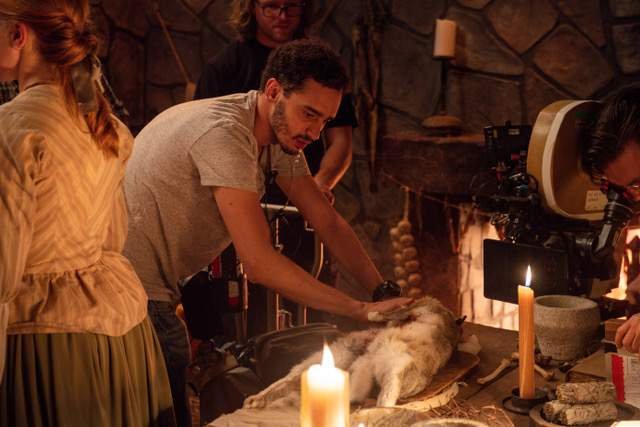
Cuando Volvimos A La Tierra, the Pablo Riesgo-directed film, was lauded with praise by the film community long before it became a hit on the streaming platform Canela TV and its fifty million viewers. This blend of comedy, science fiction, and social commentary film had its world premiere at the Academy Museum of Motion Pictures in Los Angeles and received nominations for an Imagen Award, from the Rome Prisma Independent Film Awards, and others. Starring Ptolemy Slocum as Marcel (of the Oscar Award Winning film Barbie and Primetime Emmy Award Winning series Westworld), Gabriel Romero as Rodrigo (of the TV series What If…?, Archer, Futurama, and War of the Worlds for LA Philharmonic with Sigourney Weaver), and Jorlhey Novelo as Ines, the story presents the intermingling of struggling immigrants and space-exploring billionaires. While both of these character types are highly believable, placing them in a context and setting that doesn’t seem hyperbolic or “preachy” is not an easy task. The desert where Marcel and Ines are crossing in search of a better life is where they find a man in astronaut gear who is presumably dead (Marcel). They aid the billionaire who is only slightly injured and deeply in need of their lifesaving water. Though it’s dangerous, they share their water and thus begins an exploration of how people view what is most important. From Marcel’s basecamp, which is designed to mimic the Martian landscape, to the modern and advanced-looking Equirria (Marcel’s company) logo populated throughout his gear and beyond, the viability of this billionaire’s world-travelling undertaking is reliant on what Jose Daniel crafted for this film. These subtle yet striking details powerfully underscore the chasm that separates the wealth and social divide between these characters. When conflict arises between them, it is all the more expected as their surroundings and belongings are prominent indicators of the differences between them. Cuando Volvimos A La Tierra has been part of the official selection of film festivals like Festival Internacional de Cortometraje UVAQ in Morelia, Mexico, DIFF Shorts Festival of the Dallas International Film Festival, Hollywood Shortsfest, Mirada Corta Short Film Festival in Mexico City, and was nominated for best short in the Imagen Foundation Awards.

As the art director for Mean Goals, Mr. Daniel helped break new ground in this first-of-its-kind queer sports comedy produced by Agua Dulce Productions. Similar to its premiere at the Los Angeles Latino International Film Festival in May of 2025, Mean Goals has received enthusiastic responses at film festivals around the country, like Cinema Diverse in Palm Springs, Light Reel Film Festival in Washington DC, FilmOut San Diego, and was nominated for best international short at Festival Internacional de Cine Independiente LGBTQIA+ in Mexico City. A traditional underdog story told in a new way, this film presents the Latino and Gay communities at the intersection of soccer and family. Jose was mindful of approaching his work on this production with a real-world mindset. He communicates, “It was essential to find items that were athletic while being gay in a non-cliche way. Director Ahuatl Amaro and I discussed the elements of Mexican and gay culture that would infuse the sets and make a proper Mexican household. I developed graphics that represented Tenoch’s and his father’s fondness for soccer and their love for their family, as well as gathering decorations, furniture, appliances, food and other elements that supported the story. I helped the production designer conceive the look of this set, designing graphics, sourcing set decoration and props to establish Tenoch and his father’s home to feel warm, lived-in, and nostalgic, the opposite of the flashy soccer world.” Jose also notes, “Being able to be part of a film that tells queer stories and represents communities that rarely get the spotlight was fulfilling. It was also incredible to have Latino queer people working in the cast and crew and building a tight-knit community of filmmakers together. Growing up, I didn’t have stories like Mean Goals that told the complexities of being an outcast for being queer or Latino, so to me it is extremely rewarding to know that young people can see themselves on the big screen and feel represented and accepted.”
Writer : Calvin Hooney