Unearthing Peace of Mind: Safeguarding Your Home’s Foundation with Smart Sewer Line Maintenance Strategies
Table of Contents
- Regular Inspections
- Proper Waste Disposal
- Grease Management
- Tree Root Control
- Installing Backwater Valves
- Using Drain Screens
- Avoiding Chemical Drain Cleaners
- Upgrading Old Pipes
Introduction
Maintaining your home’s plumbing in optimal condition begins with regular maintenance of your sewer lines. Failing to maintain sewer lines can lead to costly repairs, hazardous blockages, and even health risks. Preventive steps and regular maintenance will help reduce emergencies and keep your plumbing system operating seamlessly. For residents in Southern California, especially those seeking professional help, a dedicated sewer line service Santa Monica can offer comprehensive support for all your sewer line concerns, providing you with peace of mind and long-term results.
Proactive maintenance not only protects your home’s valuable infrastructure but also helps maintain sanitary conditions and prevent disruptive issues, such as backups. Homeowners who consistently care for their sewer lines spend less time worrying about unexpected problems and more time enjoying a comfortable home environment.
Regular Inspections
Annual or biannual sewer line inspections by a licensed plumber are one of the most effective ways to prevent small problems from becoming major disasters. Modern plumbers often use high-tech video cameras to inspect your sewer lines in detail, identifying cracks, obstructions, and root intrusions without the need for invasive digging. Early detection through these inspections not only saves money but also minimizes property damage and inconveniences caused by undetected problems. Discover the benefits of sewer camera inspections and learn about proper maintenance through trusted resources.
Proper Waste Disposal
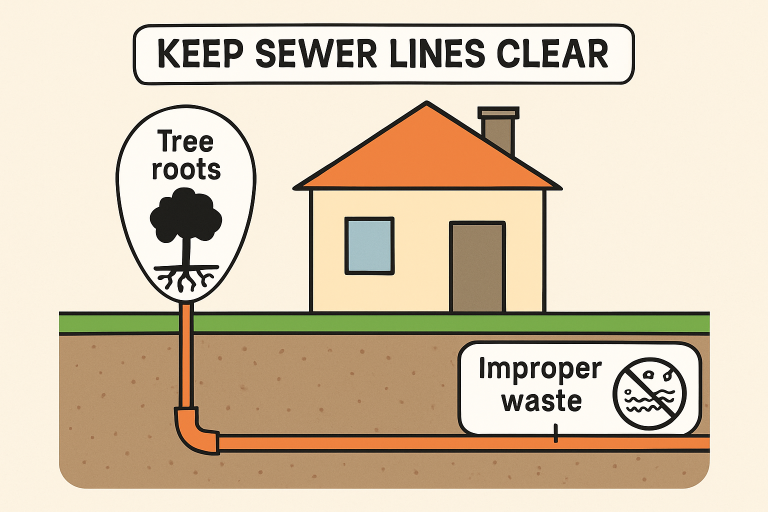
Human waste and toilet paper are the only items that should be flushed down the toilet. Everyday items that might seem harmless—such as facial tissues, paper towels, feminine hygiene products, and so-called ‘flushable’ wipes—do not break down properly and can accumulate in your pipes, resulting in severe clogs. Please make it a household rule to avoid flushing anything except toilet paper and waste. Also, be cautious with what goes down your kitchen and bathroom drains.
Grease Management
Grease is a leading cause of clogged sewer lines. When poured down the drain, grease cools and solidifies, sticking to the insides of pipes and restricting water flow. Even small amounts accumulate over time. Always let grease cool before disposing of it in the trash, or collect it in a container for proper disposal. Not only does this practice keep your pipes clear, but it also benefits municipal sewage systems. Learn more from the EPA’s guidelines on wastewater management.
Tree Root Control
Tree roots seek out moisture and can easily invade older or weakened sewer lines. These roots grow inside the pipe, causing obstructions and potentially breaking the line over time. Before planting trees or large shrubs, consult property maps to determine the location of your sewer lines and select vegetation accordingly. Installing root barriers and regularly monitoring the area can significantly reduce the likelihood of root intrusion. Arborists and plumbers can provide advice specific to your location and landscaping needs.
Installing Backwater Valves
Heavy rainfall or overloaded municipal sewers can send wastewater flowing backward into your home, causing unsanitary and expensive flood-style damage. Backwater valves serve as a safety mechanism, automatically closing if they detect backflow, thereby preventing sewage from entering your house. Professional installation of a backwater valve is a vital investment for homes at risk of sewer backups, as it can safeguard both your property and health.
Using Drain Screens
Easy to install and inexpensive, drain screens in the kitchen, bathroom, and laundry room provide a first line of defense against debris like hair, food scraps, and lint. These particles can form stubborn clogs if they are allowed to enter the pipes. By using and regularly cleaning drain screens, you reduce the risk of blockages without needing harsh chemicals or frequent plumbing calls.
Avoiding Chemical Drain Cleaners
Chemical drain cleaners may provide a quick fix, but their harsh formulas can deteriorate pipes from the inside out, accelerating wear and tear on them. For routine maintenance and minor clogs, simple solutions like a mixture of baking soda and vinegar, followed by boiling water, can safely clear debris. For persistent or serious blockages, it’s always best to call a plumber, as repeated use of chemicals can void warranties and damage your plumbing system over time.
Upgrading Old Pipes
Many older homes have sewer lines made from now-outdated materials such as clay, cast iron, or Orangeburg pipe, which are more prone to cracking, tree root intrusion, and collapse. If your home falls into this category, consider working with a licensed plumber to assess whether replacement or relining is necessary. Modern PVC or HDPE pipes offer superior longevity and resilience. Investing in a sewer line upgrade is often cheaper in the long run than repairing frequent, costly leaks or cleaning up after backups.
By following these essential maintenance tips, you can extend the life of your home’s sewer system and avoid disruptive plumbing emergencies. Proactive care ensures your plumbing functions efficiently, saves you money on repairs, and protects your household from unexpected issues and hazards.