Advancements in Pipeline Pigging: Enhancing Efficiency and Safety
Key Takeaways
- Modern pigging technologies like smart pigs offer real-time data collection, enhancing maintenance precision.
- Automated pigging systems reduce manual intervention, improving safety and operational efficiency.
- Innovations like pig valves and multi-pig launchers address challenges in complex pipeline systems.
- Integration of digital monitoring systems with traditional pigging operations is transforming pipeline management.
Table of Contents
- Introduction to Pipeline Pigging
- Emergence of Smart Pigging Technologies
- Automated Pigging Systems
- Innovations in Pigging Equipment
- Integration of Digital Monitoring Systems
- Environmental and Safety Considerations
- Future Trends in Pigging Technology
Introduction to Pipeline Pigging
Pipeline pigging is a crucial practice in the oil, gas, and chemical industries to ensure operational longevity, safety, and regulatory compliance of pipeline networks. Using specialized devices called “pigs,” operators can perform complex cleaning and inspection tasks while maintaining uninterrupted flow. These pigs scrape debris, remove moisture, and gather vital internal inspection data without costly shutdowns or flow rerouting. In-line inspection enhances operators’ ability to detect and manage internal deposits, corrosion, and anomalies, which can pose risks to infrastructure and the environment.
As pigging technology evolves, integrating intelligent systems and advanced pigging equipment for pipeline inspection now empowers industries with exact and comprehensive assessments. These innovations support well-informed, proactive maintenance schedules that reduce operational risks, prevent costly downtime, and extend the service life of high-value pipeline infrastructure. With growing regulatory oversight and technological maturity, pigging is rapidly gaining recognition as an essential strategy for enhancing operational reliability and promoting environmental responsibility.
When properly implemented, pigging programs serve as a cornerstone of preventive maintenance. They help eliminate blockages before they escalate, minimize the risk of pipeline failures, and reduce the need for unplanned repairs—all of which safeguard assets and reputations. Companies can avoid major disruptions and potentially catastrophic incidents by identifying issues early and maintaining peak system performance. Modern pigging solutions’ improved data accuracy and operational efficiency underscore their critical role in today’s energy sector. As expectations for safety, sustainability, and reliability continue to rise, adopting advanced pigging equipment for pipeline inspection is no longer optional—it’s a forward-looking investment in resilience and long-term value.
Emergence of Smart Pigging Technologies
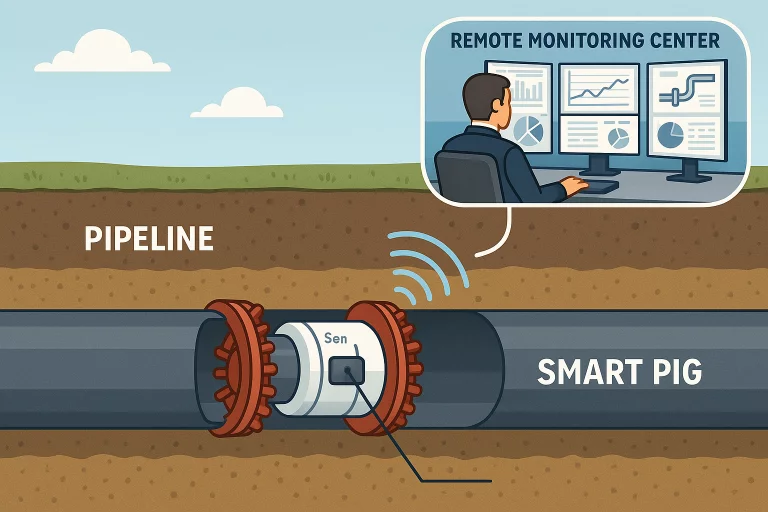
The pipeline industry has experienced a significant transformation in recent years with the advent of innovative pigging technologies. Unlike their predecessors, which were primarily used for cleaning pipelines and removing blockages, smart pigs are equipped with sophisticated sensors, including ultrasonic, magnetic flux leakage (MFL), and electromagnetic acoustic transducers. These high-tech devices are specifically engineered to collect in-depth, real-time data on pipeline integrity, such as detecting corrosion, measuring wall thickness, and even identifying micro-cracks and metal loss that are invisible to the naked eye or basic inspection tools.
Once deployed, smart pigs continuously transmit the captured data to remote operational centers where machine learning algorithms and advanced analytics tools process, sort, and interpret the findings. Such data richness empowers operators to visualize and assess pipeline health at unprecedented detail, paving the way for maintenance activities based on tangible need rather than convention or minimal regulatory standards. By enabling data-driven decisions, smart pigging helps operators optimize the scope of interventions and minimize unnecessary downtime, thereby reducing operational expenditures and eliminating avoidable downtimes.
However, smart pigging’s true value-add lies in its ability to support predictive maintenance programs. By continually analyzing evolving data points and wear patterns across the pipeline infrastructure, operators can anticipate future problem areas, prioritize high-risk zones, and preemptively address vulnerabilities before they develop into major incidents. This precision in monitoring—and the resulting efficiency gains—have elevated the role of smart pigging as a gold standard among pipeline integrity management tools.
Automated Pigging Systems
Automated pigging systems have steadily emerged as a cornerstone technology, redefining the landscape of pipeline integrity management. Unlike manual systems requiring direct operator involvement, automated pigging employs an intelligent blend of programmable logic controllers, software algorithms, and real-time telemetry. Operations such as launching, monitoring, and retrieving pigs can now be managed with minimal—or even zero—on-site human engagement, providing crucial safety and operational performance enhancements.
With automation, pigging systems can be scheduled to perform at optimal intervals, responding to operational demands and asset-specific requirements. These systems monitor conditions instantaneously and can react to anomalous readings or emergencies without delay, facilitating rapid isolation or remediation where necessary. Automated pig launches, retrievals, and in-line pressure monitoring remove workers from potentially hazardous environments, thus drastically reducing the risk of mishaps or injuries associated with high-pressure infrastructure.
Furthermore, automated pigging is highly adaptable—it is applicable to both legacy pipelines and new installations, regardless of system complexity or operating environment. Retrofitting older installations with automated units can help companies modernize their infrastructure in a cost-effective, staged approach. Ultimately, automated pigging systems’ scalability, reliability, and enhanced response times set new benchmarks in pipeline safety and operational efficiency.
Innovations in Pigging Equipment
The complex landscape of today’s pipeline systems—with their frequent changes in diameter, bends, flow direction, and intricate internal structures—demands versatile, robust equipment designed to meet a spectrum of operational challenges. Responding to industry needs, equipment manufacturers and innovators have developed new tools and technologies that enable effective pigging in even the most difficult environments.
Pig Valves
An outstanding advancement in this domain is the development of pig valves. These devices provide a compact, efficient alternative to standard pig launchers and receivers by enabling seamless pig insertion and retrieval directly into a pressurized line. With reduced spill risk and minimized fugitive emissions, pig valves substantially lower the operational downtime and environmental impact of pigging activities. Their reduced footprint is especially advantageous in space-constrained areas, such as offshore platforms, urban environments, or remote field locations, where conventional equipment may not be practical.
Multi-Pig Launchers
Multi-pig launchers have revolutionized operational workflows by accommodating and launching several pigs sequentially without requiring manual reloads between cycles. This continuous operation is invaluable for lengthy pipelines or those transporting heavy, viscous, or abrasive substances that require frequent cleaning or monitoring. By diminishing the need for human intervention, multi-pig launchers further boost efficiency and reduce time spent on routine maintenance.
When integrated with state-of-the-art diagnostic tools and automation, these technological improvements to pigging hardware ensure highly reliable, consistent, and thorough pigging operations. The result is a safer, more productive pipeline infrastructure, less prone to blockages and emergencies.
Integration of Digital Monitoring Systems
The adoption of digital monitoring systems marks a pivotal shift in pipeline operations. These systems seamlessly integrate with innovative pigging solutions to modernize and enhance pipeline management. Harnessing the power of Internet of Things (IoT) devices, sensors, and robust network connectivity, operators can maintain continuous and granular oversight over pipeline parameters such as pressure, temperature, and flow conditions.
Companies gain centralized control over vast pipeline networks by converging these digital platforms with pigging operations. Data is collected in real-time, enabling advanced pattern recognition, instant anomaly detection, and prompt alerts whenever conditions exceed pre-set safety or performance thresholds. Using digital twins—virtual models of entire pipelines—together with predictive analytics allows for precise simulation of performance, informed maintenance planning, and optimized decision-making. Such data-centric operations extend pipeline life, optimize resource use, and prevent catastrophic failures long before they can pose real-world risks.
Environmental and Safety Considerations
Modern pigging techniques are revolutionizing the pipeline industry by minimizing operational risks, reducing human exposure to hazardous conditions, and improving inspection accuracy. Automated and intelligent pigging detects leaks early and reduces the need for personnel in dangerous locations. Robotic and remote inspection capabilities mitigate the risk of injury and chemical exposure. This approach helps identify threats, mitigate spills, reduce greenhouse gas emissions, and protect natural habitats. Data-driven inspection and maintenance routines support environmental compliance, allowing pipeline operators to align their activities with local and global sustainability standards. This approach builds trust with stakeholders and regulators while benefiting ecosystems and communities.
Future Trends in Pigging Technology
Looking ahead, the future of pigg is unfolding at the confluence of artificial intelligence, machine learning, cloud computing, and advanced robotics. As pipelines become increasingly sensorized and interconnected, the data generated presents unprecedented opportunities for intelligent analytics and insight-led management.
AI-powered systems can now learn from millions of historical data points, operational incidents, and maintenance routines, allowing them to predict failure points, recommend optimal intervention windows, and reduce costs across the pipeline’s operational lifecycle. Cloud-bastwins facilitatefacilitateg dynamic, real-time pipeline conditions modeling to implement risk-based maintenance and asset investment strategies.
The ongoing convergence of robotics, digital platforms, and innovative pigging tools will usher in a new pipeline management era characterized by exceptional cost efficiency.